Missing Perspective: Horses Reveal What Your Team Won’t Tell You
Blind spots. As leaders, we may not welcome having ours pointed out, but the insight is always valuable.
An indelible mark was left by my dad during my teen years. His observation, “Kim, for you to understand something, you have to do it.”
That insight ignited an insatiable quest to understand experiential learning and in adulthood recognize an opportunity to re-imagine leadership development.
At fullCIRCLE, we have the honor of equipping and developing leaders through a distinctive approach that combines classroom theory, learned skills and natural abilities with immersive, outdoor experiences alongside a herd of horses.
Experiential Learning vs. Passive Learning
Major journals in education and leadership development have long recognized David Kolb’s research and expertise on the transformational power of experiential learning.
Experiential learning builds capacity to lead because leadership skills develop through practice, not passive exposure.
Passive learning can build knowledge about leadership, but it separates learning from doing and offers few opportunities to apply new concepts.
Publications that study leadership, talent development and experiential education such as the Journal of Experiential Education, Leadership Quarterly and Journal of Management Education– agree:
- Leaders are shaped far more by doing, reflecting and applying than by listening or reading alone.
- Leadership competencies such as decision-making, influence, emotional intelligence, conflict navigation – develop through situations that require navigation, not through lectures or theoretical instruction.
For more than a decade, our experience with clients has consistently substantiated these findings.
Do-Reflect-Apply
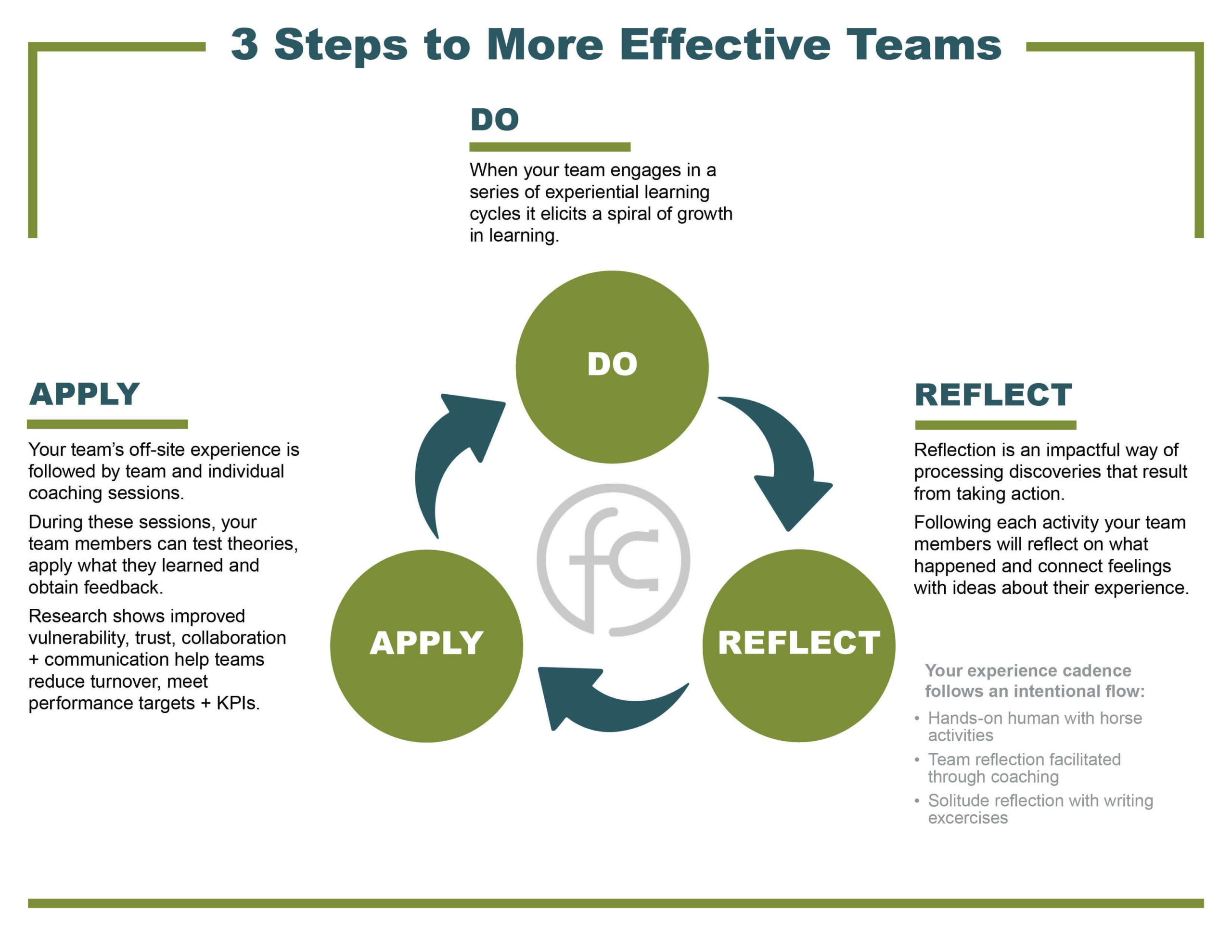
The fullCIRCLE DO-REFLECT-APPLY model illustrates the (experiential) process involving growth-minded teams immersing themselves with horses while exploring leadership strategies, receiving real-time feedback and adjusting behaviors in a safe and supportive environment.
Why Horses?
Few of God’s creatures are as noble and soul stirring as horses. Because horses cannot be emotionally manipulated or lied to, they expose our behavior, including our most subtle intentions.
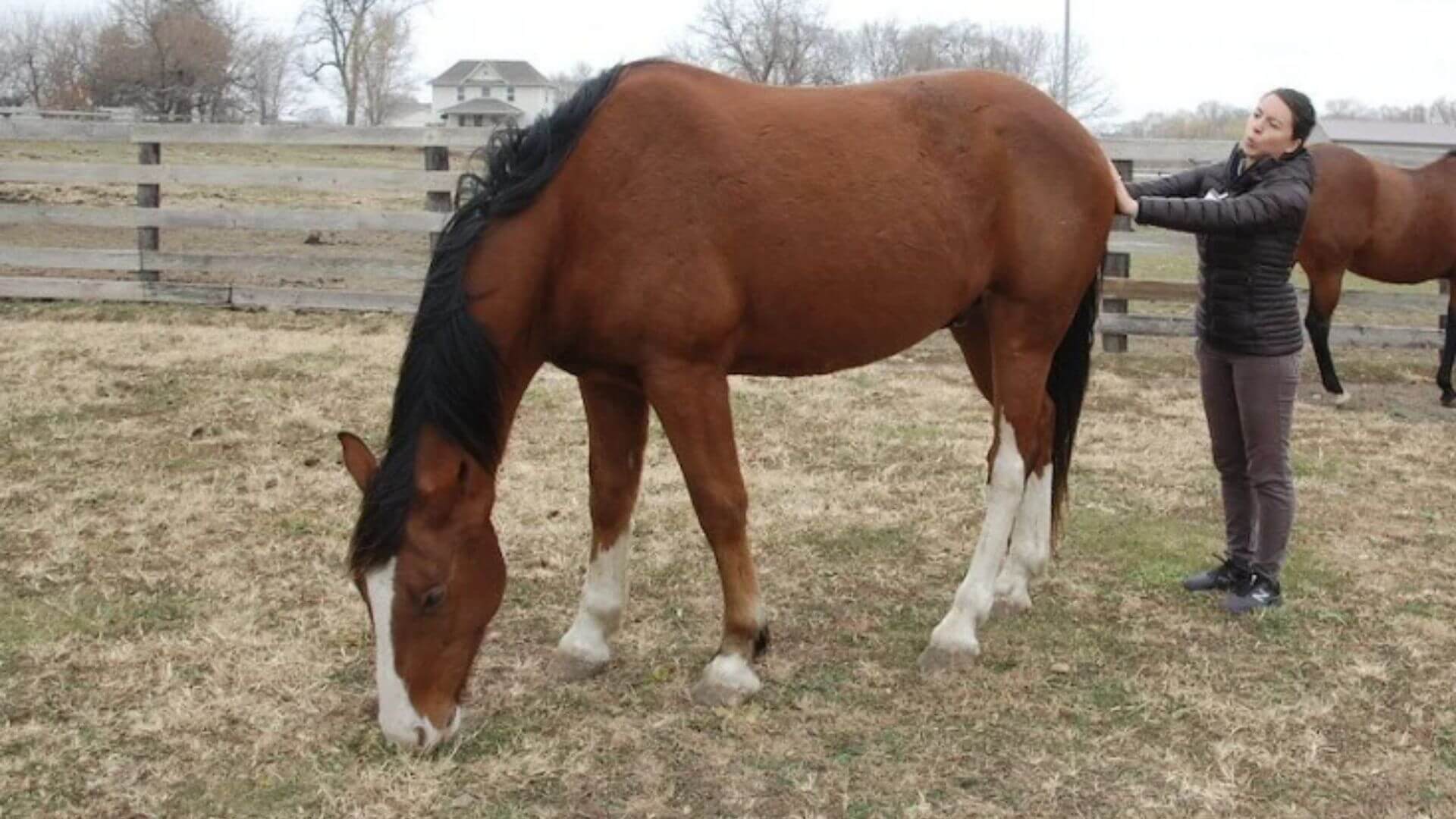
Horses reflect us through their behavior. They consistently mirror our exact feelings, attitudes and intentions.
Amazingly, interacting with horses can quickly and accurately reveal who you are and how you show up to others.
Why experiential learning?
Experiential learning builds capacity to lead because skills grow through practice, not passive exposure.
Organizations that shift from passive learning models to active and immersive ones, experience transformational results.
Experiential learning creates an environment where:
- Mistakes are reframed as learning opportunities
- Retention and engagement improve by up to 75 percent compared to traditional methods.
- Learners are put in real-world scenarios to navigate decisions, solve problems and reflect on outcomes.
- Intellectual, emotional and social engagement accelerates skill development and retention.
Becoming a Leader Others WANT to Follow
After experiencing the fullCIRCLE leadership development process, one leader was able to identify his blind spot: he had been operating on autopilot; unaware of how he showed up for others, especially in stressful situations.
Several months later, a crew member got a company truck stuck at a jobsite. Then several others became stuck while trying to help. As he approached the frustrating scene, he noticed how anxious and unsettled the team was.
On autopilot, he would have set in motion inappropriate and accusatory language. Instead, drawing on a skill he had practiced, he calmly asked the crew, “How can we solve this?” With sighs of relief, the team relaxed and calm conversation unfolded. Instead of leaving the crew to carry out a solution, he worked alongside them. Walls came down between him and his crew as subsequent team interactions became peaceful and more constructive.
An impactful way to begin a transformation like this is through the leadership development process at fullCIRCLE. Are you a growth-minded leader willing to consider this research-based strategy for yourself and your leadership team?
Let’s start a conversation today!